
Acupuncture for Pain Management in South Surrey / White Rock and Langley
A whole-body approach rooted in classical Chinese medicine
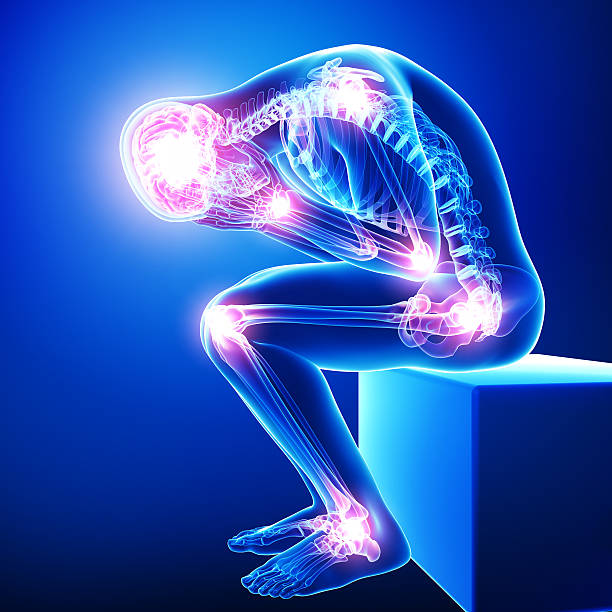
Pain is not always simply a problem of muscles, joints, or injured tissues. Many people find that ongoing pain also affects sleep, stress levels, energy, movement, and overall quality of life.
In Chinese medicine, pain is often viewed as a sign that the body’s normal balance and circulation have been disrupted. While the pain may appear in a specific area, the factors contributing to it are often broader than the site of discomfort itself.
At Balance Acupuncture, I use Balance Method Acupuncture and classical Chinese medicine to help restore movement, reduce pain, and support the body’s natural ability to recover and regulate over time.
Patients in South Surrey / White Rock and Langley commonly seek treatment for neck pain, back pain, shoulder tension, headaches, sciatica, repetitive strain injuries, and chronic pain conditions.
How Well Does Balance Acupuncture Work for Pain?
In classical Chinese medicine, there’s a saying:
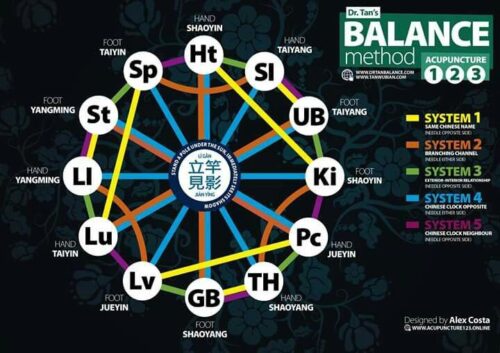
“When you stand a pole under the sun, you immediately see its shadow.”
This reflects the immediate effects of acupuncture when the right points are stimulated.
- Many acute pain conditions respond quickly and may improve within the first few treatments.
- Chronic or long-standing pain often requires a more gradual process as underlying patterns begin to change.
- During treatment, many patients notice measurable changes in pain, movement, or tension levels before leaving the treatment table.
How Balance Method Acupuncture Approaches Pain
In classical Chinese medicine, pain is often viewed as a disruption in the body’s normal flow and regulation.
Balance Method Acupuncture works by using relationships between different meridians and areas of the body to help restore smoother movement, circulation, and communication within the system.
Rather than always treating directly where the pain is located, treatment may involve points elsewhere on the body that correspond with the affected area.
For example:
- Shoulder pain may be treated through points on the legs
- Lower back pain may be balanced through the arms
- Ankle pain may be approached through opposite-side channels
Each treatment is adjusted based on:
- Your symptoms
- Channel relationships
- Pulse and tongue observation
- Movement changes during treatment
- How your body responds in real time
You can also learn more about the broader philosophy behind this approach through:
What Is Balance Method Acupuncture
Conditions Commonly Supported
Neck, Shoulder & Upper Back Pain
neck tension and stiffness, shoulder pain, restricted mobility, postural tension, upper back tightness
Sciatica & Lower Back Pain
sciatic nerve discomfort, lower back pain, hip tension, radiating pain patterns, stiffness after movement or sitting
Headaches & Migraines
tension headaches, stress-related headaches, recurring migraines, neck-related headache patterns
Joint Pain & Mobility Issues
knee pain, arthritis-related discomfort, stiffness in joints, sports or repetitive strain injuries, movement limitations
Nerve Pain & Tension Patterns
numbness, tingling sensations, repetitive strain patterns, long-term muscular tension, recovery after injury
Pain Management Case Studies
Real-world examples often help illustrate how Chinese medicine approaches pain beyond the diagnosis alone.
Related Case Studies
Frequently Asked Questions
Why can pain become chronic even after the original injury has healed?
Chinese medicine teaches that pain often arises when the body’s natural circulation is obstructed. An injury may initially create this disruption, but if the body’s balance and circulation are not fully restored, the effects can remain even after the tissues have healed.
Stress, poor sleep, emotional strain, fatigue, and long-standing compensatory patterns may further contribute to this process, making pain more persistent or recurring. Chinese medicine, therefore, views chronic pain not only as a local issue but as a reflection of how well the body can maintain balance, adapt, and recover over time.
Why does pain keep coming back?
In Chinese medicine, recurring pain is often viewed as a sign that the underlying pattern has not been fully resolved. While symptoms may temporarily improve, factors such as stress, movement habits, sleep quality, recovery capacity, and long-standing tension patterns may continue to influence how the body functions.
Rather than focusing only on the area that hurts, Chinese medicine seeks to understand the broader pattern contributing to the recurrence and support the body’s ability to maintain more lasting balance over time.
Can stress contribute to physical pain?
Yes. Many people notice increased neck tension, headaches, jaw tension, back pain, or muscle discomfort during periods of prolonged stress. Physical and emotional patterns often influence one another.
Why does pain sometimes move to different areas of the body?
The body functions as an interconnected system. As one area improves, underlying tension patterns may become more noticeable elsewhere. Treatment often looks at broader patterns rather than focusing only on the site of pain.
Treatment Approach
Depending on the situation, treatment often includes:
- Balance Method Acupuncture
- Pulse and tongue observation
- Movement and channel assessment
- Home acupressure guidance
- Lifestyle observations related to recovery patterns
- Seasonal wellness support
Treatment is individualized based on the person’s overall presentation rather than on a single protocol for everyone.


Clinical Reflections
The following reflections are based on previous clinical work in Kelowna and Vernon, prior to relocating to South Surrey / White Rock and Langley.
“After the first treatment, my neck pain was almost completely gone and I could finally move normally again.”
— Neck & Upper Back Pain
“I had been dealing with lower back and sciatic pain for months and was barely able to walk comfortably. After treatment, the pain reduced dramatically and I was able to return to normal daily activities.”
— Sciatic Pain & Lower Back Pain
“The improvement was surprisingly fast. My pain reduced significantly after the first session, and within a few treatments, I felt like myself again.”
— Neck & Shoulder Pain
“After years of tightness and stiffness in my lower back and hips, I was finally able to move more freely again and return to activities I had stopped doing.”
— Hip & Lower Back Stiffness
Additional case reflections and longer clinical examples are available throughout the website and case study section.
Supporting Pain Relief Through a Whole-Body Approach
Whether pain developed recently or has been present for years, treatment begins with understanding the broader pattern contributing to the discomfort and how it is affecting daily life.
Other Pain Concerns Commonly Seen in Practice
- TMJ discomfort and jaw tension
- Lower back pain and stiffness
- Sciatica and radiating leg pain
- Frozen shoulder
- Neck tension and restricted movement
- Knee arthritis and chronic knee discomfort
- Tennis elbow and repetitive strain injuries
- Plantar fasciitis and heel pain
Appointments are available in South Surrey / White Rock and Langley.
Contact
Call/Text: 604-338-1595
Email: info@balance-acupuncture.ca
You are also welcome to explore the homepage and blog for additional educational articles, clinical observations, and practical reflections related to Chinese medicine and whole-body health.