
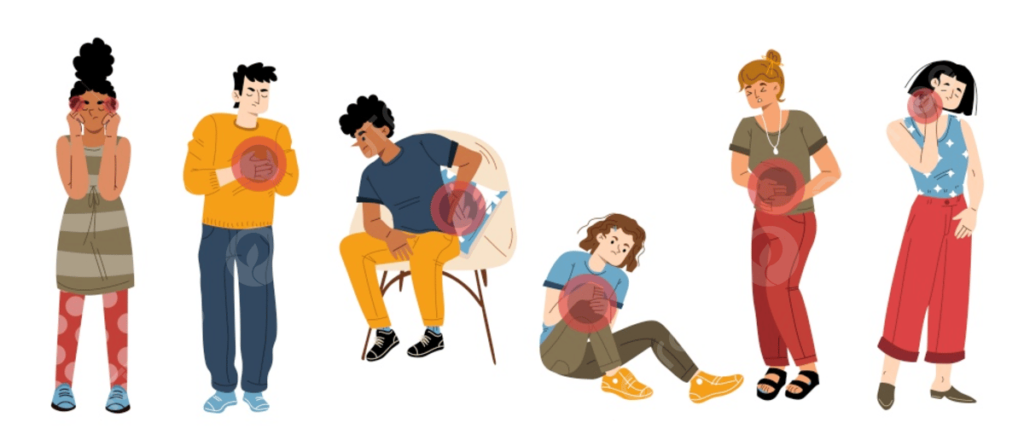
Many people come to the clinic with symptoms that don’t seem to fit together:
- feeling tired but unable to sleep
- cold feet with heat or pressure in the chest or head
- bloating together with low appetite
- feeling mentally restless but physically heavy or exhausted
In classical Chinese medicine, these kinds of patterns are often understood through the relationship between Yin and Yang. This relationship helps us see the body as a connected system rather than a collection of separate problems.
What follows is a brief overview of Yin and Yang, and how this perspective supports the way I work with acupuncture in the clinic.
Yin–Yang as a Way of Seeing the Body
Yin and Yang are not things inside the body, but a way of describing qualities and relationships.
- Yin is linked with cooling, moistening, rest, storage, and depth.
- Yang is linked with warmth, movement, activity, transformation, and expression.
In a regulated system, Yin and Yang:
- support each other
- contain each other
- keep one another in check
When this balance is disrupted, the body often shows it through:
- changes in sleep, digestion, and bowel movements
- shifts in body temperature or sweating
- pain or tension patterns
- changes in mood, anxiety, or mental clarity
Rather than focusing on a single symptom, classical Chinese medicine looks at how these different signs relate to one another as part of a larger pattern.
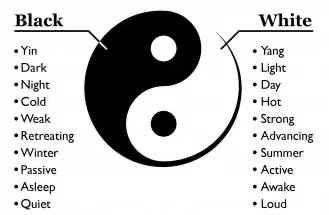

Yin in the Body
Yin is the cooling and nourishing aspect of the system. It helps the body:
- maintain fluids and moisture
- settle and calm
- move into deeper states of rest and repair
When Yin is reasonably sufficient, people often describe:
- a sense of being grounded
- sleep that actually restores them
- skin, eyes, and tissues that feel hydrated and comfortable
- a quieter, steadier mind
From a Chinese medicine perspective, Yin weakness (often called Yin deficiency) can be associated with patterns such as:
- dryness (skin, eyes, throat)
- increased thirst
- feeling too warm, especially later in the day
- night sweats or warm palms/soles
- difficulty settling into sleep or staying asleep
- internal agitation or restlessness
The exact presentation is individual. The same Yin–Yang principle is there, but the way it shows up in the clinic depends on the person in front of me.r overall pattern, not in isolation.
Yang in the Body
Yang is the warming and activating aspect of the system. It helps the body:
- generate and distribute warmth
- move blood and fluids
- transform food into usable energy
- initiate movement, action, and engagement with the world
When Yang is reasonably sufficient, people often describe:
- steady energy through the day
- feeling warm enough, without being overheated
- digestion that feels reliable
- a natural desire to move and participate in life
From a Chinese medicine perspective, Yang weakness (Yang deficiency) can be associated with patterns such as:
- feeling cold, especially in the feet, hands, or lower back
- low energy or a sense of heaviness
- slower or weaker digestion, bloating, or loose stools
- low motivation or a flat mood
Again, these are viewed as part of a broader pattern, not as isolated complaints.


When Yin and Yang Are Out of Sync
Yin and Yang are always in a relationship. When this relationship is strained, people often describe experiences such as:
- hot in the upper body but cold in the lower body
- mentally overactive but physically drained
- alternating between tension and collapse
- Symptoms that move or change without a clear explanation
From this perspective:
- Symptoms are signals of how the system is regulating itself
- The same symptom can have different meanings in different people
- treatment focuses on the overall pattern, not on chasing each symptom
This is the foundation underlying how I choose points and structure treatments, rather than a set of separate protocols for each complaint.
How Acupuncture May Help
Traditional acupuncture aims to support the body’s natural ability to rebalance Yin and Yang.
In practice, this can mean:
- calming the system when there is too much internal “heat” or agitation
- gently stimulating and warming when there is too much “cold” or a lack of movement
- supporting the circulation of blood and fluids
- helping regulate sleep, digestion, mood, and energy over time
The acupuncture points chosen, the style of treatment, and the frequency of sessions are all adjusted based on your individual pattern. Yang.
A Note on Radiation and Yin–Yang
This Yin–Yang way of seeing regulation is the same framework I use when I look at how the body is responding during and after treatments such as radiation.
Radiation treatment, from a Chinese medicine perspective, is often experienced as very hot and consuming. It can affect:
- fluids and moisture
- tissue integrity
- sleep and energy
- mental and emotional steadiness
In Yin–Yang terms, this often shows up as:
- stress on Yin (the cooling, nourishing side)
- fluctuations in Yang (either agitation or collapse)
In clinic, support around radiation and its after‑effects may focus on:
- nourishing Yin and fluids
- stabilizing Yang without overstimulating
- calming the system so it can repair in its own way over time
For those wanting to explore this in more depth, I’ve written separately about radiation and Chinese medicine from this whole‑system perspective:
Further Reading
Understanding the Body as a Whole
- Balance Method Acupuncture: A Path to Health and Harmony
- What Is Balance Method Acupuncture
- How to Read the Tongue in Chinese Medicine
Foundations in Chinese Medicine
About Julia (Ya Zhu Gabriel)
Registered Acupuncturist | Balance Method Acupuncture
Now practicing in South Surrey / White Rock.
I offer an individualized approach to acupuncture rooted in Classical Chinese Medicine and Balance Method Acupuncture, with a focus on understanding the body as an interconnected whole rather than treating symptoms in isolation.
You are welcome to: