
Let’s walk through a real case to see how Chinese medicine looks at chronic IBS-C (constipation-dominant irritable bowel) — and how stress, hormones, and digestion all intertwine in the Five Element system.
Patient Background
Cira is a 29-year-old woman with a Yang Wood constitution and Yang Fire Yue Ling, a type of body that thrives on momentum but is highly sensitive to internal and external friction.
Her main concern was managing stress and chronic constipation, which began in 2016 when she was 20 years old. Despite medications and supplements (including Prucalopride, digestive bitters, probiotics, L-glutamine, and ox bile), food sensitivity and bloating persisted, and her system remained highly reactive to stress.
“When stress is low, my period comes like clockwork. When stress is high, everything slows down — digestion, energy, even my cycle.”
Step 1: Understanding Her Five Element Constitution
In the Five Element system:
- Wood (Liver/Gallbladder) thrives on direction and movement.
- Fire (Heart/Small Intestine) fuels clarity, joy, and communication.
- Earth (Spleen/Stomach) governs digestion, nutrient transformation, and postnatal Qi.
- Metal (Lung/Large Intestine) manages boundaries, respiration, and elimination.
- Water (Kidney/Bladder) supports stamina, hormonal regulation, and reproduction.
As a Yang Wood person with a Yang Fire Yue Ling, Sara’s nature is upward and outward — but in her case, excessive stress and years of gut imbalance created a structural traffic jam:
| Element | Organ | Symptoms |
|---|---|---|
| Wood | Liver | PMS, bloating, stress-reactive cycle |
| Fire | Heart | Overdrive during ovulation, mental fatigue |
| Earth | Spleen | IBS-C, food sensitivities, bloating |
| Metal | Lung/LI | Constipation, allergies, nosebleeds |
| Water | Kidney | Watery menses, hormonal sensitivity, fatigue |
This imbalance caused a collapse in Liver–Spleen–Large Intestine–Kidney coordination, especially under stress.
Step 2: Tongue and Menstrual Clues
Menstrual details
- Cycle: 28–34 days, strongly impacted by stress
- Color: Fresh or scarlet red
- Consistency: Thin and watery
- Symptoms: Bloating, fatigue, bowel changes, mild cramping before period
- Ovulation: More energy, cervical fluid becomes watery/stretchy mid-cycle
- Discharge: White, baseline
- Red tongue without coating
These signs confirmed Liver Energy stagnation, Spleen deficiency, and some Kidney/Lung axis vulnerability — with mild Damp-Heat and Blood not holding well in the lower Jiao.
Step 3: Acupuncture Strategy – Anchoring the Axis
To resolve her longstanding constipation and reactivity, we didn’t treat the bowels directly. Instead, we focused on anchoring Yang Energy, moving Wood, and stabilizing Earth and Water.
Sample Acupuncture Points Used:
Right side:
- LU7 (Lieque) – open Metal, regulate elimination
- PC6 (Neiguan) – calm stress, smooth Heart–Liver axis
- HT5/6 (Tongli/Yinxi) – regulate Fire, harmonize Shen and hormones
- ST36 (Zusanli) – strengthen Earth, support motility
- GB34 (Yanglingquan) – move Liver Qi and release pelvic tension
Left side:
- KD3 (Taixi) – root Kidney Yin/Yang, support hormonal axis
- SP3 or SP6 – build Earth Qi and transform Damp
- LV5 (Ligou) – move constrained Liver Qi and clear Damp-Heat
- SJ5 (Waiguan) – regulate Shaoyang and fluid movement
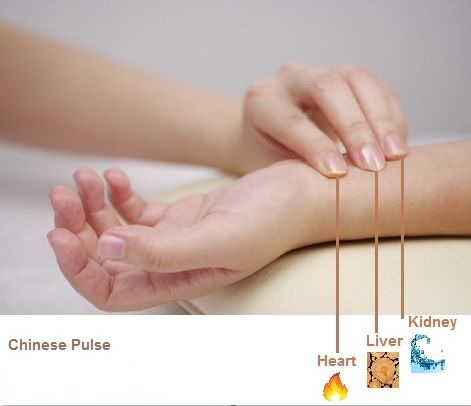
Treatment was tailored each time based on pulse changes — especially watching the Chi positions for Kidney anchor, and Guan for Liver-Spleen tension.
Step 4: Results and Shifts
Treatment Progress Summary
- After 1st Treatment:
The patient reported that stress felt more manageable. - After 2nd Treatment:
She began having regular bowel movements, although the stool was still loose. She mentioned not feeling particularly stressed and noted occasional bloating. Recommendations at this stage included drinking tea before breakfast and gradually reducing coffee intake by 50%, aiming to eliminate it over time. - After 4th Treatment:
Bloating had resolved completely. Bowel movements remained regular, though the stool continued to be soft. She did not feel stressed. - After 5th Treatment:
Regular bowel movements continued, and the stool showed improvement in consistency — no longer as soft. - After 6th Treatment:
She relocated to another city. A personalized home-care routine was provided to help maintain her progress.
Her system began to show signs of true regulation — not just temporary relief.
Final Thought
Cira’s case reminds us:
Constipation isn’t just about the intestines — it’s about how the whole system holds, moves, and lets go.
In Chinese medicine, we treat patterns, not just symptoms. And by working with the Five Element relationships, we can create stability — even in a body that’s been struggling for years.
Further Reading
Foundation
Daily Life Tips
About Julia (Ya Zhu Gabriel)--Balance Method Acupuncturist

Now practicing in South Surrey / White Rock and Langley.

I offer an individualized approach to acupuncture rooted in classical Chinese medicine and the Balance Method Acupuncture.

You are welcome to:

learn more about my approach
explore the blog
case studies
South Surrey / White Rock
Langley
Connect on Facebook